


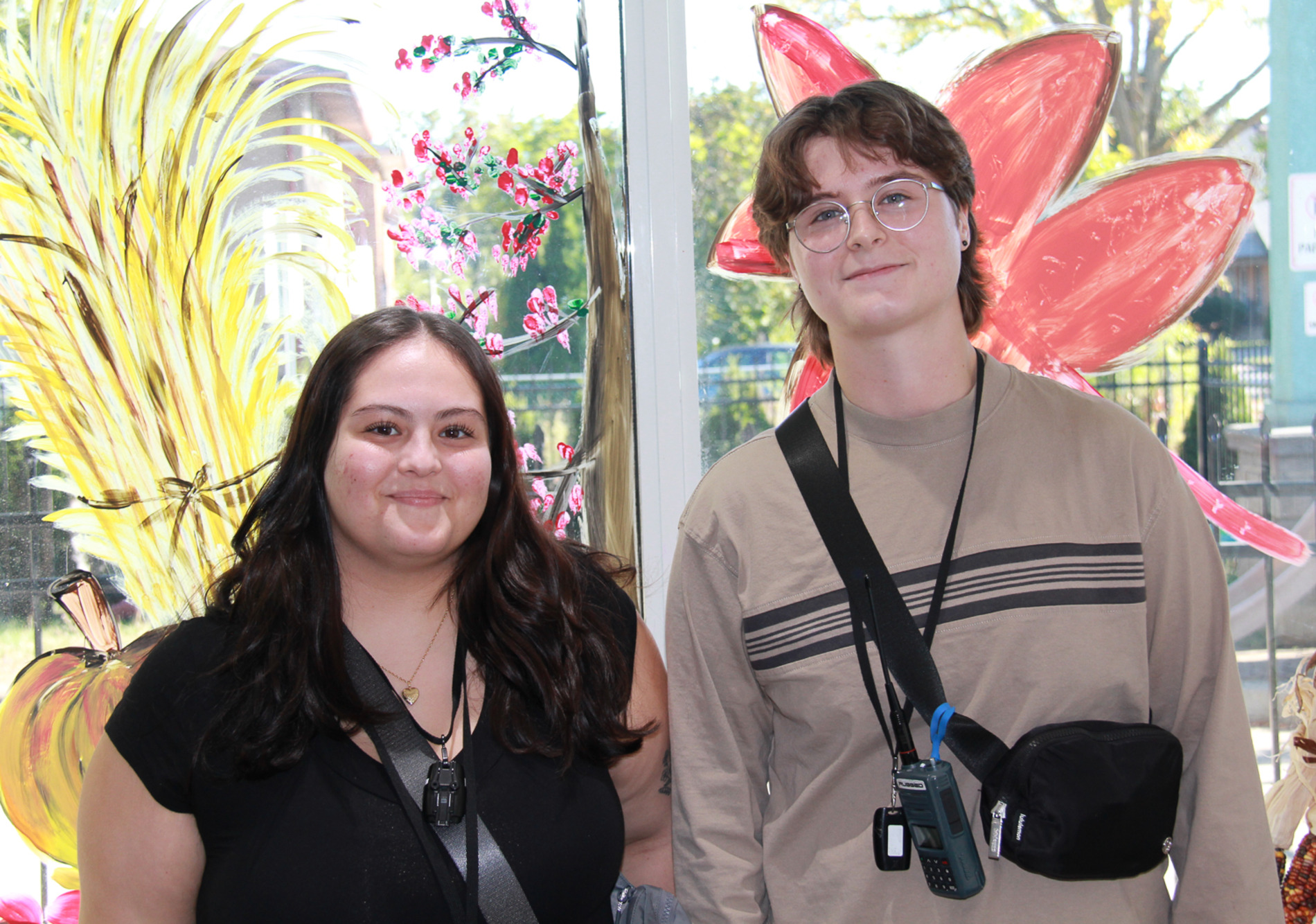
At the Welcome Centre Shelter, education extends far beyond textbooks. For University of Windsor students Kyra DiCaro and Hana LeClaire, their fourth-year social work placements have become a crash course in empathy, resilience, and the complex realities of homelessness in Windsor.
Kyra first learned about the shelter through a personal connection.
“I actually knew someone who worked here part-time,” Kyra explains. “When I applied for a job, Dawn, the shelter manager, told me I didn’t have quite enough experience yet, but she offered to take me on for placement instead. It worked out perfectly.”
Hana’s placement, on the other hand, was assigned by the university.
“We don’t get to pick where we go,” they say. “I just told my instructor I didn’t want to work with kids. When I found out I was coming here, I was excited—I’d heard great things.”
No two days at the shelter are alike. Kyra describes her mornings checking in, seeing what’s changed, and determining what needs to be done. Some days she handles client intakes, while other days she helps residents get supplies or assists with discharges.
“Every day is different,” Kyra says. Hana echoes this sentiment. “It’s a bit of everything—answering phones, helping with pre-assessments, putting away donations, even conflict control when needed,” they say. “It’s fast-paced, but I love that. The shifts go by quickly, and I feel like I’m always learning something new.”
The work can also be emotionally challenging.
“It’s hard when someone asks for help, and we can’t offer them a bed. You want to help everyone, but sometimes you can’t. We always try to find other options, but it’s tough,” said Kyra.
Hana has found that the experience has built confidence in handling difficult situations.
“At first I was nervous about conflict situations,” they say. “But watching how the staff handle things taught me what to do. Now, I feel more comfortable stepping in and talking to clients calmly and respectfully.”
Both students have seen their perspectives on homelessness and harm reduction evolve.
“Before coming here, I definitely had some biases,” Kyra says. “I used to say ‘homeless people,’ but that’s not who they are—they’re people experiencing homelessness. That person-first approach is something I’ve learned to practice every day.”
Hana shares a similar shift. “Honestly, before this placement, I didn’t agree with harm reduction,” they admit. “But seeing how much of a difference it makes—how it keeps people safe and helps them stabilize—I completely changed my perspective. Now I can’t imagine what our community would look like without those supports.”
They’ve also developed a deeper understanding of how quickly life can change.
“It can happen to anyone,” Hana says. “It’s not always addiction or bad choices. Sometimes it’s just a few bad breaks. Working here has made me more compassionate.” Having each other for support has made the placement easier. “It’s comforting knowing another student is going through the same thing,” Kyra says. “We can talk about what we see and help each other process it.”
Balancing placement, classes, and part-time work is a challenge, but both students have found ways to make it work. Kyra works a few shifts a week at a local movie theatre, while Hana makes time for activities like Top Golf or outings with friends to recharge.
“At first it was hard,” Hana says. “But now I make sure to keep busy—it helps me stay focused and grounded.”
As their placements continue into the spring, both will transition to housing support roles, giving them the chance to expand their skills even further.
“I came here wanting to help others,” Kyra says, “but I’ve realized how much this experience is helping me grow, too.” Hana adds, “I’ve learned so much—not just about the work, but about people, communication, and what it really means to support someone. It’s been eye-opening in every way.”


You must be logged in to post a comment.